
Kamdem Hometech
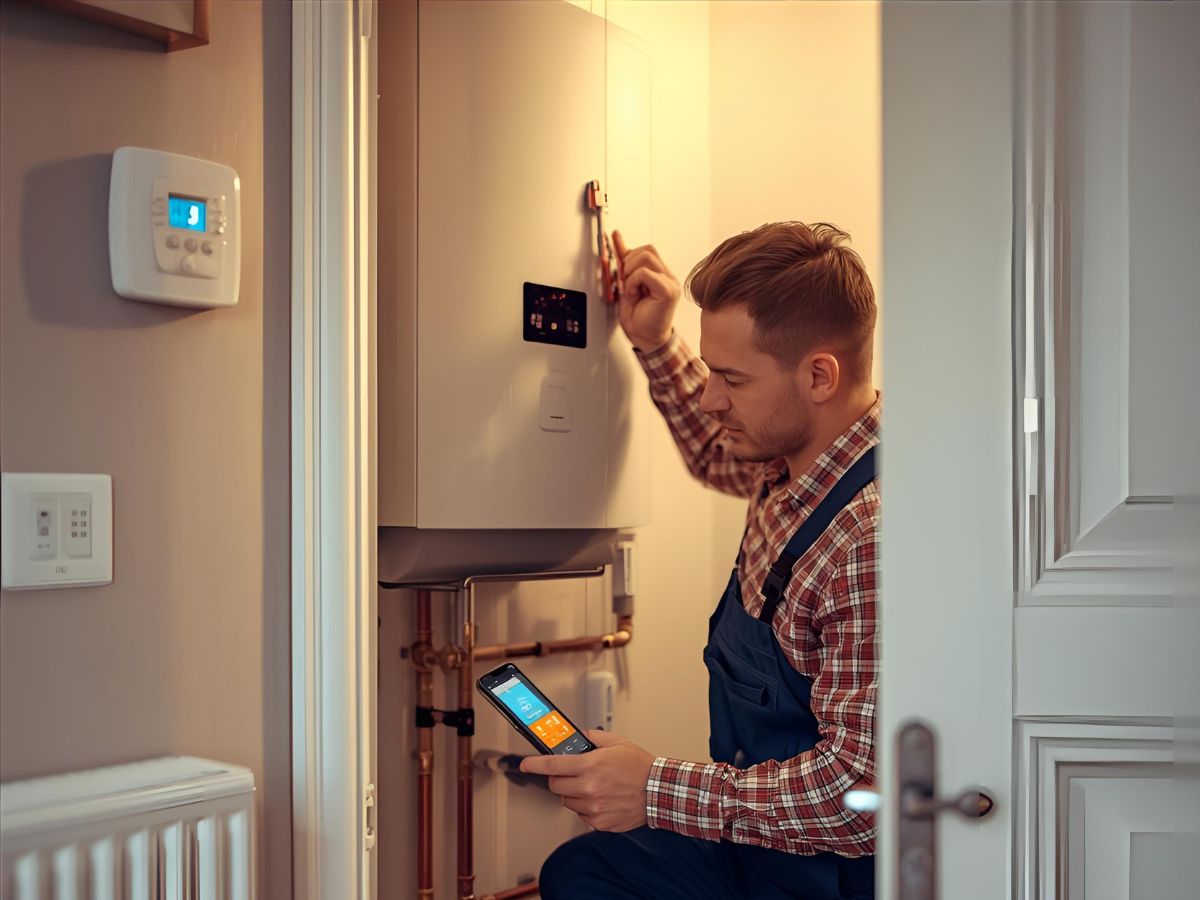
If you’re searching for a heating engineer Manchester, you likely need help repairing, installing, or servicing your heating system. This guide covers everything you need to know about finding the right professional for central heating, radiators, water heaters, and thermostats.
Safety matters when choosing heating specialists. Improper work on gas appliances creates serious risks, including carbon monoxide poisoning. That’s why selecting properly certified professionals protects your family.
A heating engineer is a trained, certified specialist who installs, maintains, and repairs heating systems. These professionals work on boilers, radiators, water heaters, and smart controls.
While plumbers handle water supply and drainage, heating engineers are specifically certified to work on gas systems. Gas Safe Registration is legally required for anyone working on gas appliances. This certification proves they understand the technical and safety requirements for boilers and gas-powered equipment.
When you search “heating engineer near me,” you’re looking for this system-specific expertise. Heating engineers perform comprehensive diagnostics beyond simple repairs. They conduct efficiency assessments, safety checks for carbon monoxide risks, and system optimization to reduce energy consumption.
For example, when evaluating an older boiler, a qualified heating engineer Manchester professional calculates potential energy savings from upgrading to a modern condensing boiler. They test combustion efficiency, check for proper ventilation, and ensure regulatory compliance.
Choosing a local Manchester heating engineer offers advantages beyond convenience. These professionals understand the specific challenges of Greater Manchester properties, including Victorian terraces, modern apartments, and suburban homes across Rochdale, Bury, Stockport, and Sale.
They’re familiar with local water chemistry, typical system configurations, and common insulation challenges. This allows for more accurate diagnostics and tailored solutions.
Fast Emergency Response
Manchester-based heating engineers provide faster emergency response times—crucial during winter breakdowns when heating loss creates urgent safety concerns. When your boiler stops working on a freezing night, a heating engineer near me can often arrive within hours rather than days.
Local Supplier Connections
Local engineers maintain relationships with regional suppliers, meaning better pricing and faster parts availability. They know which suppliers stock parts for common Manchester boiler models, reducing the time you’re without heating.
Understanding Local Regulations
Manchester heating engineers understand local building regulations and compliance requirements specific to Greater Manchester, ensuring installations meet all necessary standards.
What Central Heating Engineers Do
A central heating engineer specializes in complete heating systems—boilers, pumps, piping, controls, and radiators. For gas-fired systems, Gas Safe Registration is legally mandatory. Modern condensing boilers are complex, requiring specialized knowledge for safe installation, maintenance, and repair.
Central Heating Repair
Common central heating repair issues include boiler faults (ignition failures, pressure loss, thermostat malfunctions), circulation issues (failed pumps, airlocks, valve failures), and leaks in pipes or components.
Heating engineers approach repairs systematically, identifying root causes rather than just symptoms. For example, cold radiators might result from a failed pump, sludge buildup, or system balancing issues—each requiring different solutions.
Emergency repair services are vital in Manchester’s climate. Local engineers offer same-day response for urgent situations like complete heating loss or suspected gas leaks.
Central Heating Installation
Full central heating installation becomes necessary when systems exceed their 15-20 year lifespan. Installation decisions involve evaluating boiler type (combi, system, or conventional), radiator sizing and placement, and smart control integration.
Combi boilers provide heating and instant hot water without storage tanks. System boilers work with separate hot water cylinders. Conventional boilers suit larger properties with high hot water demand.
Engineers calculate heat requirements for each room based on dimensions, insulation quality, window area, and external wall exposure. In Manchester’s older housing stock, existing pipe sizing may not meet modern system demands, requiring upgrades.
Modern installations increasingly incorporate smart controls and zoning capabilities, allowing different temperatures for various home areas.
Safety Considerations
Qualified heating engineers perform critical safety checks including combustion analysis, carbon monoxide testing, and pressure integrity verification.
Warning signs requiring professional intervention include:
Radiator Installation
This involves heat requirement calculations for each room before recommending appropriate sizes and types. Engineers consider room dimensions, insulation levels, window area, and external wall exposure.
Modern radiator designs offer improved efficiency through increased surface area and better convection. Thermostatic radiator valves (TRVs) provide individual room temperature control, contributing to energy savings. When one room reaches its set temperature, the TRV automatically reduces flow without affecting other radiators.
Radiator Repair
Common radiator problems include:
Problem | Likely Cause | Professional Solution |
Cold spots at bottom | Sludge accumulation | Power flushing system |
Top cold, bottom hot | Trapped air | Bleeding radiator |
Leaking from valve | Worn valve seal | Valve replacement |
No heat throughout | Blockage or balancing issue | System diagnostics and rebalancing |
Knocking noises | Water flow restriction | System pressure adjustment |
Power flushing is a comprehensive cleaning process that removes sludge and debris from the entire system, resolving current issues and preventing future problems.
Radiator Efficiency
Radiators significantly influence overall heating system efficiency. Even with a modern high-efficiency boiler, poorly performing radiators waste substantial energy.
Key efficiency factors include proper balancing (ensuring equal heat distribution), insulation behind radiators on external walls, and regular maintenance to prevent sludge buildup.
Water Heater Installation
The installation of Water Heater requires considering daily hot water usage, available space, fuel type, and system compatibility. Modern combi boilers provide heating and instantaneous hot water without storage tanks—offering space-saving advantages for Manchester’s compact urban properties.
For larger households, system boilers with cylinders better meet simultaneous multiple-use demands. Water pressure varies across Manchester neighborhoods, which engineers evaluate when recommending systems.
Water Heater Repair
Common water heater issues include no hot water (thermostat failures, heating element problems, pilot light issues), inconsistent temperature, strange noises (indicating sediment buildup), and visible leaks.
Professional diagnosis follows systematic procedures: checking power sources and thermostats, examining pressure relief valves, inspecting heating elements or burners, and assessing tank integrity. Emergency repair services address urgent situations like major leaks or complete hot water loss.
Water Heater Servicing
Regular water heater servicing extends equipment lifespan, maintains efficiency, and prevents unexpected breakdowns. Professional servicing involves inspecting and cleaning burners, checking sacrificial anode rods, testing pressure relief valves, descaling heat exchangers, and verifying thermostat accuracy.
For Manchester homeowners, annual servicing proves particularly valuable given the region’s water hardness, which accelerates scale buildup that reduces efficiency.
Heating System Repair
Comprehensive heating system repair addresses interconnected issues affecting multiple components. Engineers examine boiler performance, pump operation, control functionality, and distribution efficiency.
Common system issues include frequent cycling (short on-off periods), uneven heating despite proper radiator balancing, persistent pressure loss, and unexplained efficiency drops. These problems often stem from complex interactions between components rather than single failures.
Repair vs Replace
The decision between repairing or replacing involves multiple considerations. Most heating systems last 15-20 years. Modern condensing boilers can be 30% more efficient than older non-condensing models, translating to lower fuel bills.
Consider system age, repair frequency and cost, efficiency comparison, and whether existing infrastructure supports modern equipment. In Manchester’s older housing, engineers assess whether pipe sizing, chimney conditions, and electrical capacity support new high-efficiency equipment.
Thermostat Installation
Upgrading to programmable or digital thermostats provides immediate comfort and efficiency benefits. Modern thermostats offer precise temperature control, programming flexibility, and improved system responsiveness.
Installation considerations include optimal placement (away from drafts, direct sunlight, and heat sources), proper wiring configuration, and system compatibility. Heating engineers ensure new thermostats integrate correctly with existing equipment.
Smart Heating Controls
These controls offer capabilities beyond traditional thermostats, including remote access via smartphone apps, learning algorithms that adapt to household patterns, integration with smart home systems, and detailed energy usage reporting.
For Manchester homeowners, advantages include adjusting heating while away and receiving maintenance alerts before problems become emergencies. Professional installation ensures proper integration and maximum energy-saving potential.
Credentials
Gas Safe Registration is mandatory for anyone working on gas appliances. Check registration through the official Gas Safe Register website. Additional valuable accreditations include manufacturer approvals (like Baxi installer status), trade association memberships, and insurance coverage.
Experience & Specialization
Heating engineers should demonstrate specific experience with your system type, property age, and the specific work required. Evaluating experience involves reviewing case studies, asking for references from similar projects, and inquiring about ongoing training.
Reviews & References
Customer feedback provides invaluable insights into reliability, work quality, and professionalism. Consider patterns in reviews rather than isolated comments. For Manchester homeowners, local review sources provide particularly relevant perspectives.
Essential Questions to Ask:
Category | Key Questions |
Credentials | Are you Gas Safe registered? Can I see your registration card? |
Experience | How many similar projects have you completed? |
Service Terms | What is your emergency response time? Do you offer guarantees? |
Project Specifics | Will you provide a detailed written quote? |
Recognizing early warning signs prevents minor issues from escalating:
Inconsistent Heating Performance
Unusual Operational Signs
Efficiency Indicators
Safety Concerns (Requiring Immediate Action)
Heating engineers recommend annual servicing even without obvious problems. Preventive maintenance identifies developing issues before they cause breakdowns. Manchester homeowners should schedule pre-winter servicing to ensure systems face peak demand in optimal condition.
Maintaining an efficient, reliable heating system requires professional expertise matched to local conditions. Whether addressing immediate repair needs, planning system upgrades, or implementing modern smart controls, partnering with a qualified heating engineer Manchester ensures work meets safety standards and delivers lasting value.
Benefits of local service include rapid emergency response, understanding Manchester’s specific housing characteristics, knowledge of local regulations, and experience with common challenges in Greater Manchester homes.
When selecting a heating engineer near me, prioritize Gas Safe Registration, relevant experience with your system type, positive reviews from local customers, and clear communication.
Take proactive steps toward heating system reliability. Don’t wait until a breakdown forces emergency decisions.
Contact our Manchester heating specialist for your next installation, repair, or service requirement. Early professional engagement prevents minor issues from developing into major expenses while ensuring consistent comfort through Manchester’s variable climate.
Source: Manchester City Council areas guide
https://www.manchester.gov.uk/info/200088/communities_and_neighbourhoods/7688/areas_of_manchester